Explainer
Arrow Puzzle Games, Explained: Three Mechanics, One Rule
Every arrow puzzle runs on the same rule: an arrow may only do what its direction allows. What changes is what you are allowed to do with it.
Updated 2 nov. 2026 · Written by the Arcadium editorial team
In short
An arrow puzzle is a logic game played on a small board of directional arrows, where the puzzle is the order you move them in, not the speed. Three mechanics cover almost all of them: extraction (remove an arrow once nothing blocks its path), sliding (tap an arrow and it travels the way it points), and routing (place arrow tiles to steer something to an exit). None of the three needs a timer, and that is the point.
What makes a puzzle an arrow puzzle
The board is a set of arrows, each one pointing somewhere, and a single rule that ties movement to direction. An arrow that points right can only leave to the right; an arrow that points up can only go up. Everything else in the game is a consequence of that constraint.
That makes the genre unusually clean. There is no hidden information, no dexterity test and — in every build we carry — no timer. You lose a level by moving an arrow too early, never by moving too slowly. The board is small enough to hold in your head and the state is fully visible, which is why the genre sits next to sudoku and minesweeper rather than next to match-3.
It also explains the appeal. A mistake is legible: you can point at the arrow that blocked you. And because the board does not scroll, restarting costs one tap rather than a level.
Mechanic 1 — extraction: remove an arrow once its path is clear
In an extraction puzzle the arrows are stuck in a solid object and you pull them out one at a time. An arrow comes free only when nothing is in front of it, so the board is really a dependency graph: every removal opens some paths and closes none, until the one you needed is walled in.
Arrow Cube Escape is the purest version here. The arrows sit on the six faces of a cube, and you rotate the cube to check whether the arrow you want is actually clear from the angle you assumed. The rotation is what makes it harder than it looks: a path that is open on the face you are looking at can be blocked on the face behind it.
The skill is spatial bookkeeping plus order planning. There is no way to brute-force it — tapping at random just leaves you with a cube you cannot finish — but there is also no penalty for stopping to think, which is what makes it work as a five-minute break.
Mechanic 2 — sliding: tap an arrow and it travels the way it points
Sliding puzzles keep the arrows on a flat board and let them move. Tap one and it slides in the direction it points, usually until it leaves the board. Clear every arrow and the level is done.
The trap is that arrows can block each other mid-board. An arrow that slides into a corner can sit in front of the only exit another arrow has, and the board is now unsolvable — with all the evidence you need sitting on screen. Arrow Legend is the cleanest example we carry: two rules, one board, and a difficulty curve that comes entirely from how many arrows are in each other's way.
Sliding rewards forward simulation. Two or three moves of lookahead is enough for most boards, which makes this the mechanic to start with if you have never played an arrow puzzle.
Mechanic 3 — routing: place arrow tiles to steer something to an exit
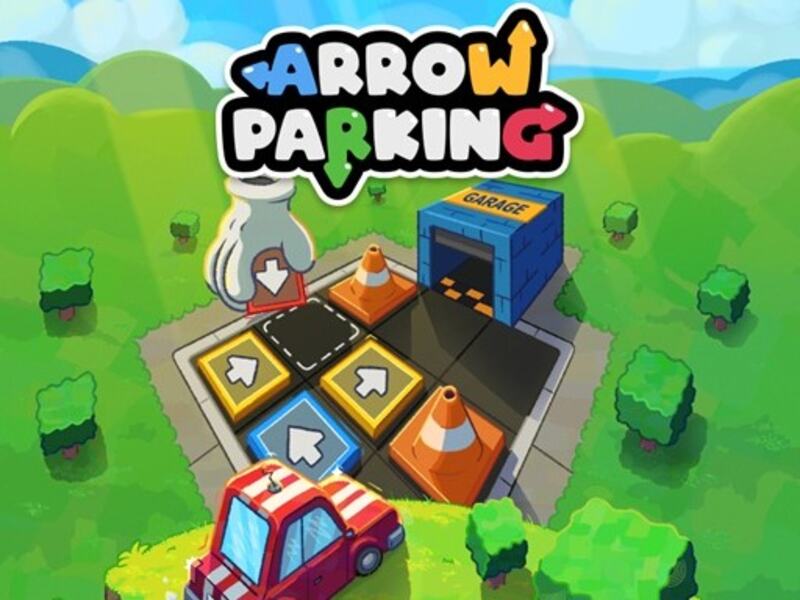
Routing inverts the genre. The arrows are not obstacles to remove, they are instructions to place. You drag arrow tiles onto a grid so that a car — or whatever else is moving — follows them to a garage.
Arrow Parking is the one we carry. It is less about undoing a wrong move and more about building a path that works, and the failure mode is different too: instead of a dead board, you get a route that loops or runs into a wall. It plays closest to a pipeline or train-track puzzle, with arrows standing in for track.
If you like construction more than deduction, start here. If you like the moment where a blocked board suddenly opens up, the other two mechanics deliver it better.
How to tell which one you are looking at
Three checks settle it in a few seconds. First, tap an arrow: if it disappears you are in an extraction puzzle; if it moves, you are in a sliding one. Second, look at the board before you touch anything — if pieces are waiting to be placed, it is routing. Third, look for something that moves on its own: a car, a ball, a stream. Arrow puzzles are static; if something is animating, you are probably looking at an archery game wearing an arrow icon.
Why the genre is relaxing rather than stressful
None of the three games here has a timer, a life counter or a score that decays while you think. Every move is reversible by restarting a small board. The visual language is flat and quiet. Those four things are most of what people mean when they call a puzzle relaxing, and they are design decisions, not accidents — the same board with a 30-second clock would be a completely different game.
The one thing that is not relaxing is the last few arrows. As the board empties, the number of legal moves drops and the cost of a wrong one goes up. That ramp is the genre's whole difficulty curve, and it is why these games are easy to start and hard to finish quickly.
At a glance
| Game | Mechanic | What you actually do | Developer | Released |
|---|---|---|---|---|
| Arrow Cube Escape | Extraction | Rotate a six-sided cube and pull out arrows whose path is clear | GTS games | 1 Aug 2026 |
| Arrow Legend | Sliding | Tap arrows so they travel the way they point, until the board is empty | MarketJS | 30 Jul 2026 |
| Arrow Parking | Routing | Drag arrow tiles onto a grid to steer a car into the garage | Burning Goat Studio | 20 Sep 2026 |
Play the games in this article
All games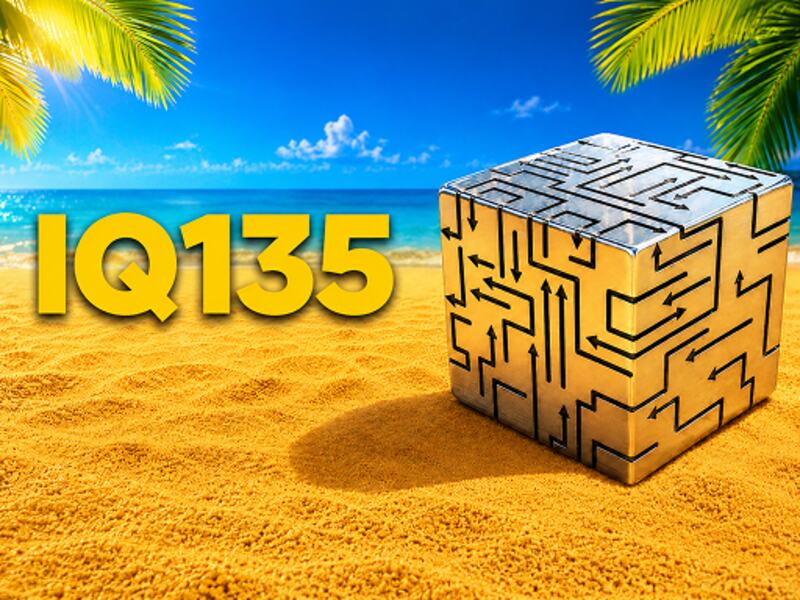

Browse by tag
Frequently asked questions
- What is an arrow puzzle game?
- A logic puzzle built from directional arrows, where each arrow can only move the way it points and the challenge is the order you move them in. There is no timer and no reflex requirement in any of the three games we carry; a level is lost by moving an arrow too early, not too slowly.
- Are arrow puzzle games free to play?
- Yes. All three games on this page are free, run in the browser and need no download or account. They work on desktop, tablet and phone.
- Which arrow puzzle should I start with?
- Arrow Legend, because it has two rules and a flat board. Move to Arrow Cube Escape if you want the 3D version with rotation, and to Arrow Parking if you would rather build a route than dismantle one.
- Are these games timed?
- No. None of the three has a countdown, a move limit that ends the level, or a score that decays while you think. The only pressure is the one you put on yourself by moving too fast.
- Do arrow puzzle games work on a phone?
- Yes, all three are touch-friendly. Arrow Cube Escape is the one where a phone is genuinely fine but a larger screen helps, because rotating the cube to check the faces behind is easier with more room.
- Why are there only three arrow games on the site?
- Because the genre is small and most builds in it repeat each other. The three we carry use three different mechanics — extraction, sliding and routing — rather than three versions of the same board.
How this was put together
Every game listed was played in the browser before it was written up, and the mechanic described is the one its own rules screen states. Developer and release date come from the build's published metadata. Catalogue-wide numbers are generated from our own game data on every build, so they cannot drift from what the site actually carries.
More guides
- Puzzle Game Genres, Explained: Match-3, Bubble, Sorting, Merge, Logic
- Free browser game sites like Arkadium — eight alternatives compared.